DeployCDC

Header image created for DeployCDC site
Role: Lead UX Designer
Timeline: Q4 2019 – Q4 2022
Team: 1 UX / Graphic Designer, 1 Ops Director, 1 Developer, 1 Copywriter
Organization: DeployCDC (Community Development Coalition) | Covid-19 Response
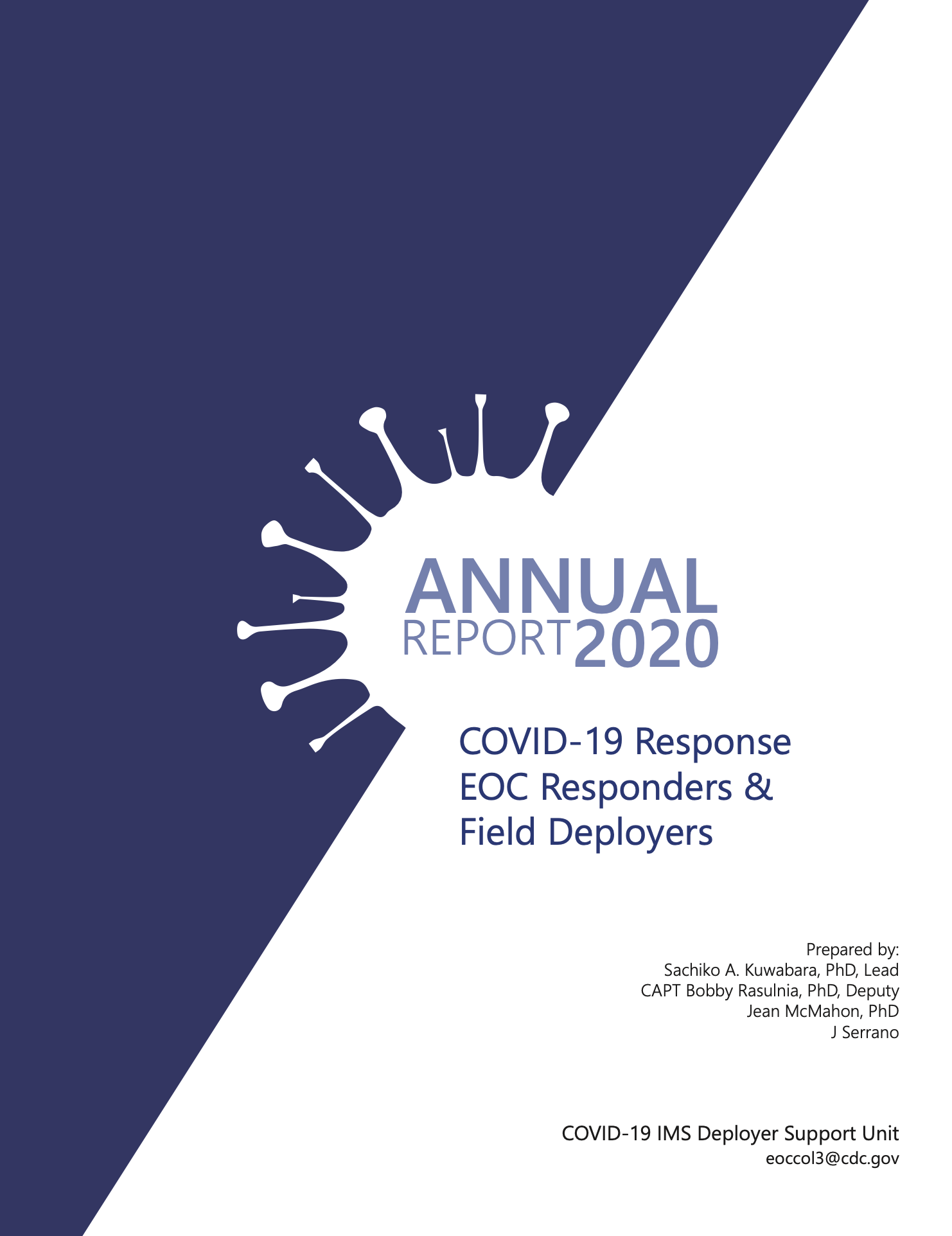
Annual Reports
Case Study - Crisis Response Platform Design During COVID-19
When COVID-19 disrupted the nation in early 2020, DeployCDC needed to rapidly shift from in-person service coordination to a digital-first emergency response model.
The organization was in need of :
A centralized volunteer system
Real-time supply tracking
Digital donation workflows
A scalable communication framework
I led the UX strategy and product design of a crisis-response platform that supported volunteer deployment and donor transparency.
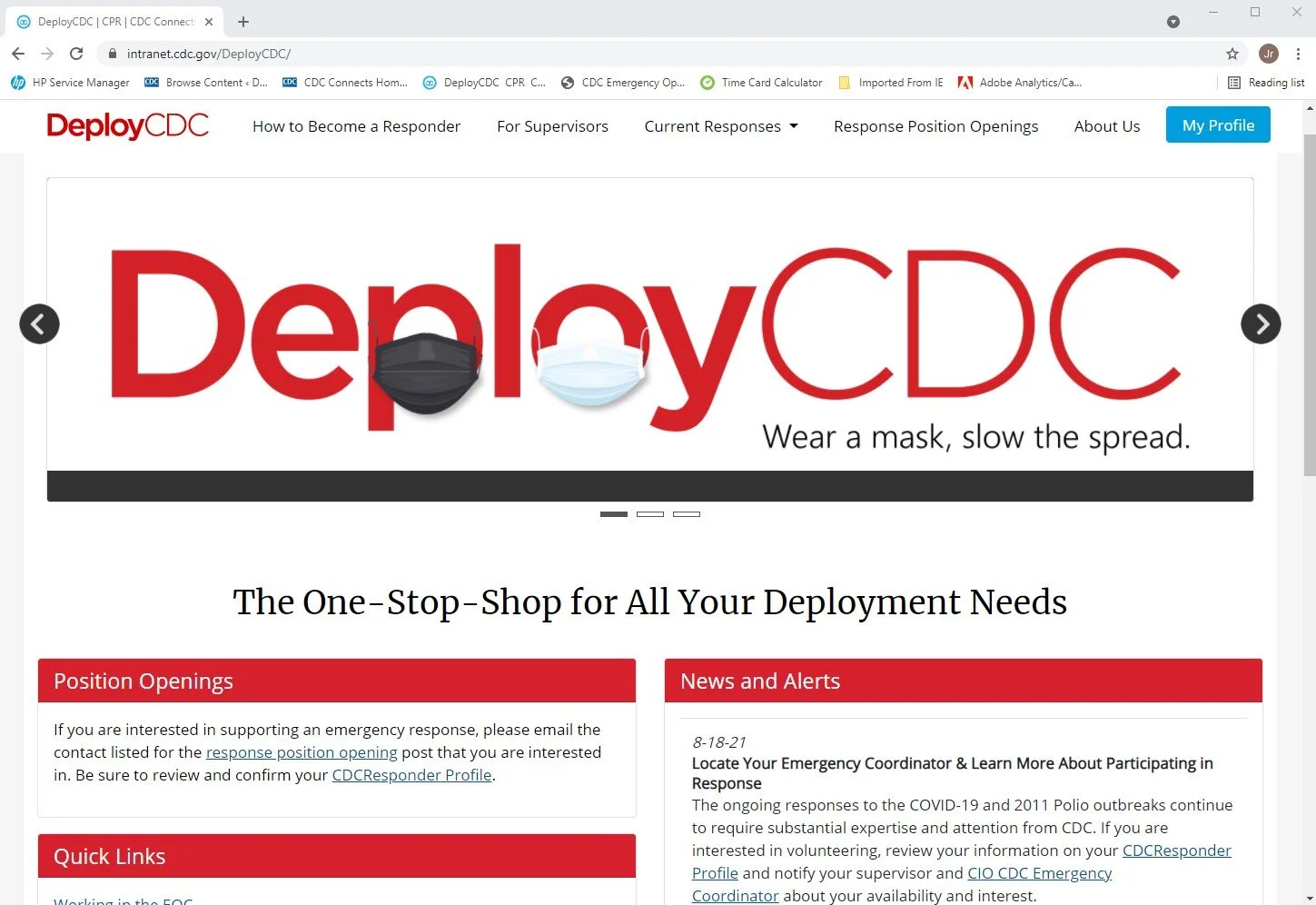
Design layout for DeployCDC
What is DeplyCDC?
An internal web-based platform used by the CDC to support emergency response staffing and deployment operations.
What it does
DeployCDC helps the CDC:
Coordinate and manage deployment of personnel during public health emergencies
Provide responders with mission details, logistics, and reporting tools
Share guidance, policies, and training materials
Track responder assignments and availability
Who uses it
CDC emergency responders
CDC staff assigned to outbreak or disaster responses
Authorized CDC response partners
Is it public?
No. DeployCDC is not a public-facing system and is only accessible to authorized CDC personnel and partners involved in response activities.
When is it used?
It supports responses to events such as:
Disease outbreaks (e.g., pandemic responses)
Natural disasters
International health emergencies
Domestic public health crises
Problem Statement
How might we design a scalable, low-friction digital system that allows:
Volunteers to sign up and deploy safely
Community members to request assistance
Donors to trust and track impact
Staff to coordinate logistics in real time
All under emergency conditions.

Research & Discovery
Key Insights
Staff were operating reactively without centralized visibility.
Burnout became a huge problem
Volunteers lacked clarity on deployment roles.
Households required mobile-first, low-bandwidth access.
Donors wanted outcome reporting beyond anecdotal impact.
Methods
12 stakeholder interviews
18 volunteer interviews
9 household recipient interviews
Workflow audit of 7 disconnected spreadsheets
On-site observation of relief distribution events
UX Strategy
Core principles:
Mobile-first
Low cognitive load
Accessibility (WCAG AA)
Rapid onboarding (<2 minutes)
Designed a three-sided ecosystem:
Volunteer Deployment Portal
Multi-Resource Assistance Intake
Operations & Impact Dashboard
Solution Architecture
Volunteer Deployment Experience
Impact
Signup time reduced 65%
Volunteer retention increased from 42% → 68%
Burnout reduction 32%
Key Improvements
Reduced required fields from 22 → 8
Capacity-based shift selection
32% reduction in after-hours coordination
Automated SMS confirmations
Multi-Resource Assistance Intake
UX Improvements
User search time reduced from 8 min → 2.5 min → 36 sec
38% drop in incomplete submissions
Spanish-language toggle improved engagement by 21%
Expanded beyond food to support:
Emergency supply requests
Rental assistance coordination
Utility relief support
Essential household resource deployment
Burnout
The DeployCDC platform reduced deployer burnout indicators by 32% by centralizing communication, automating coordination workflows, and improving role clarity. The reduction wasn’t just about time savings — it reduced cognitive load, which is the primary driver of burnout in prolonged crisis operations.
*Measured via internal survey + operational indicators
After the platform:
Clear role dashboards
Real-time deployment visibility
Automated confirmations
Centralized communication
Standardized crisis workflows
Before the platform:
Manual spreadsheets
Role ambiguity
Constant Slack/email back-and-forth
Emergency pivots without visibility
Reactive decision-making
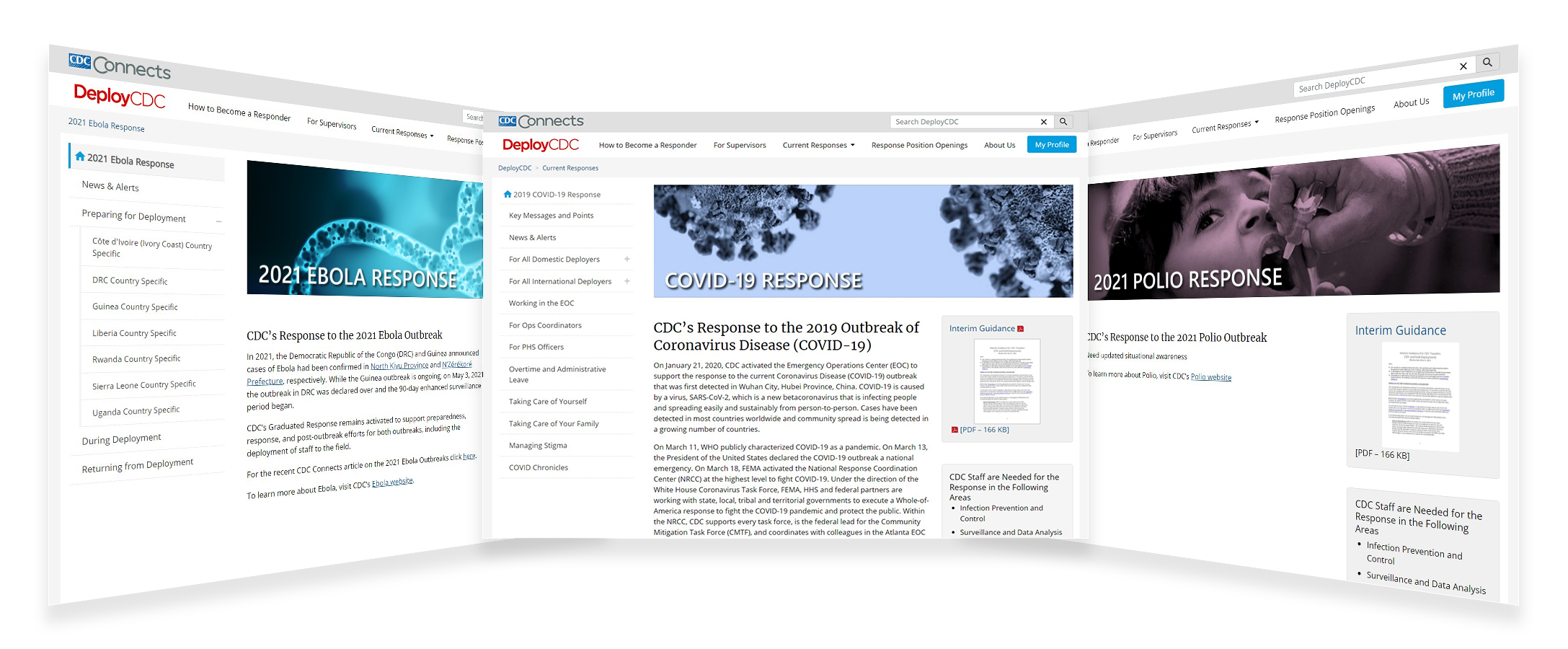
Implemented design layout to better organize content for DeployCDC Covid-19, 2021 Ebola, and 2021 Polio Response Deployments

Header image created for DeployCDC site
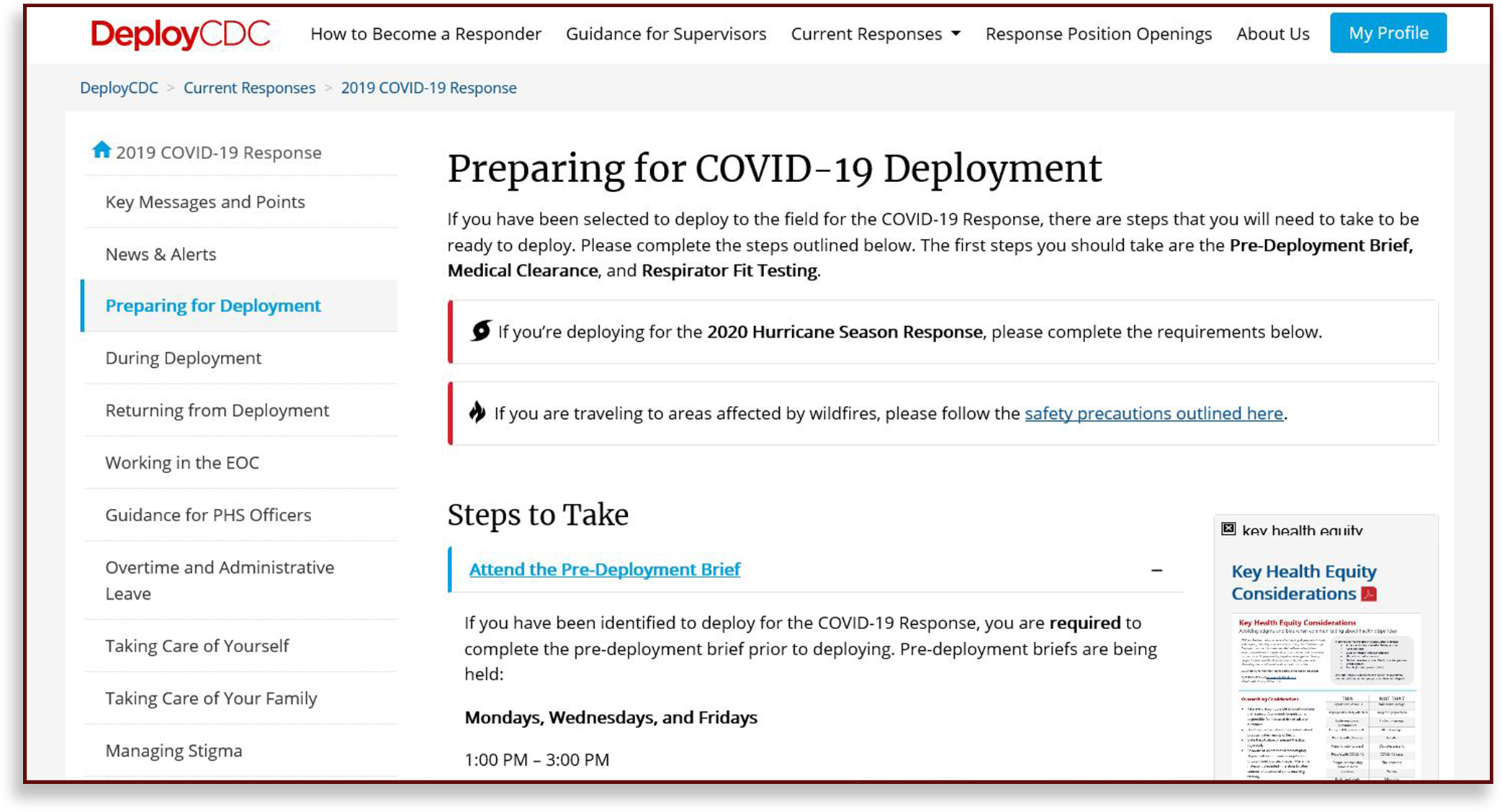
Preparing for Covid-19 Deployment with additional alerts for multiple response notifications
Operations & Impact Dashboard
Impact
Eliminated 7 manual spreadsheets
Reduced coordination time by 41%
Reduced supply misallocation by 23%
Increased repeat donor contributions by 34%
Features
Real-time deployment visibility
Resource inventory tracking
Geographic maps of requests
Automated donor impact reporting
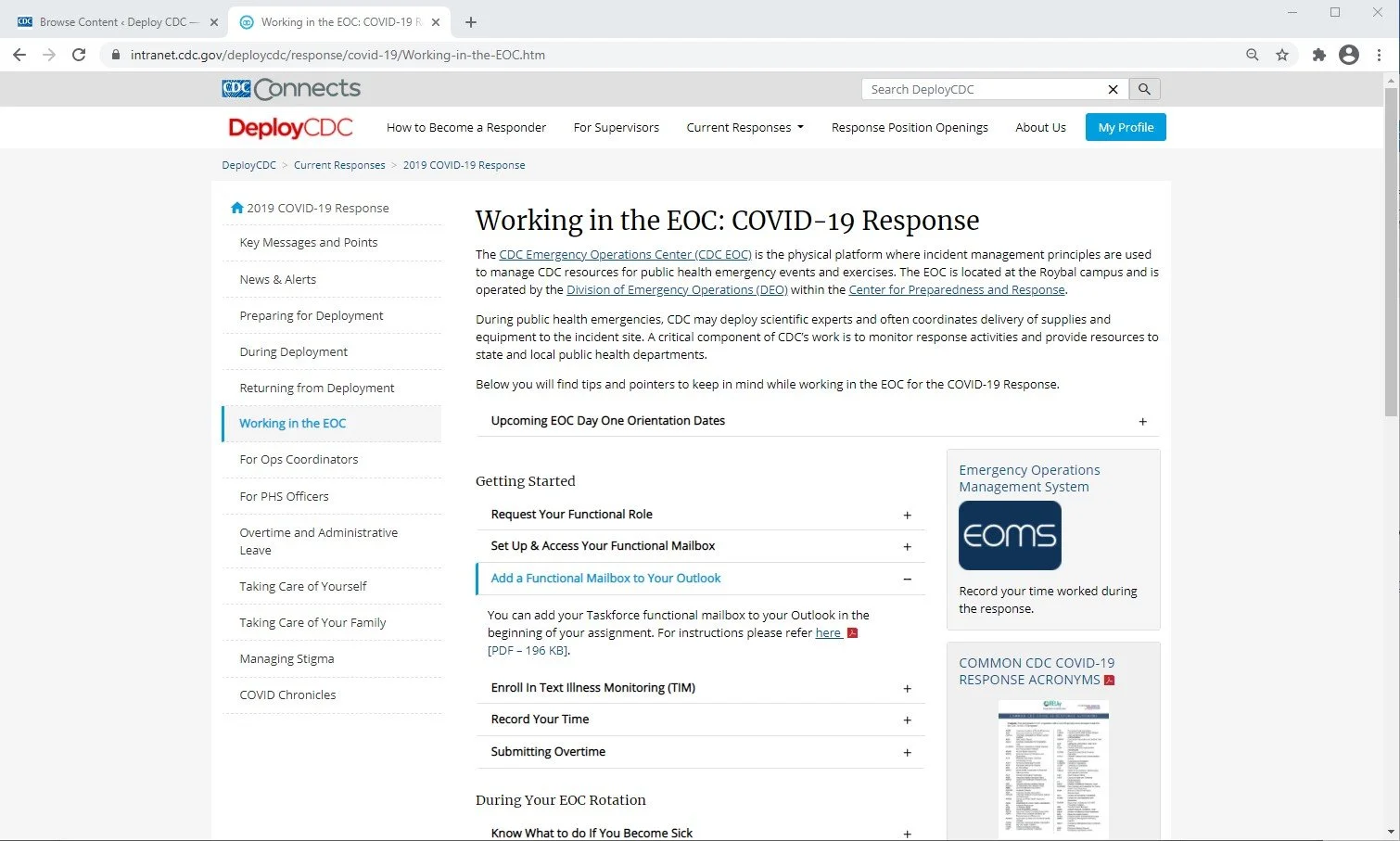
Working in the EOC design layout - used accordions to increase organization of content as well as simplifying visibility
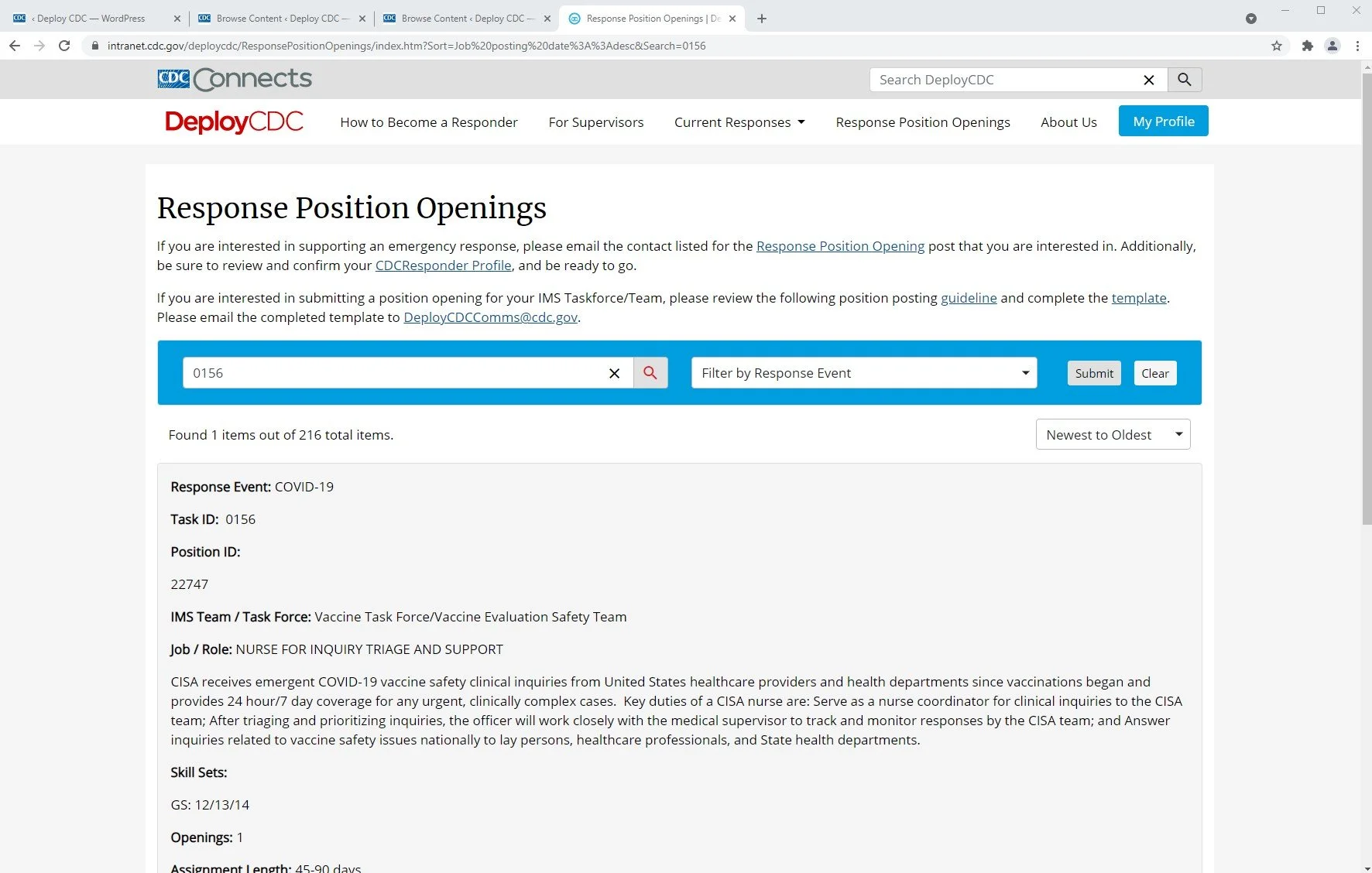
Response position openings design layout for responders to pick deployment possibilities
Data Insights
Analytics for DeployCDC pages
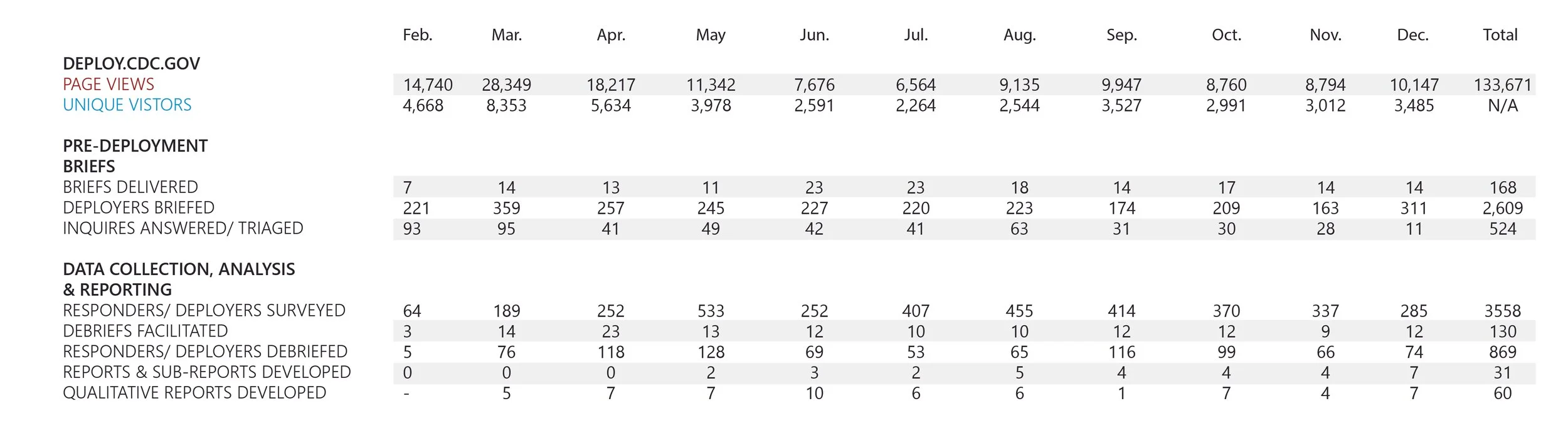
Page Views per month 2020
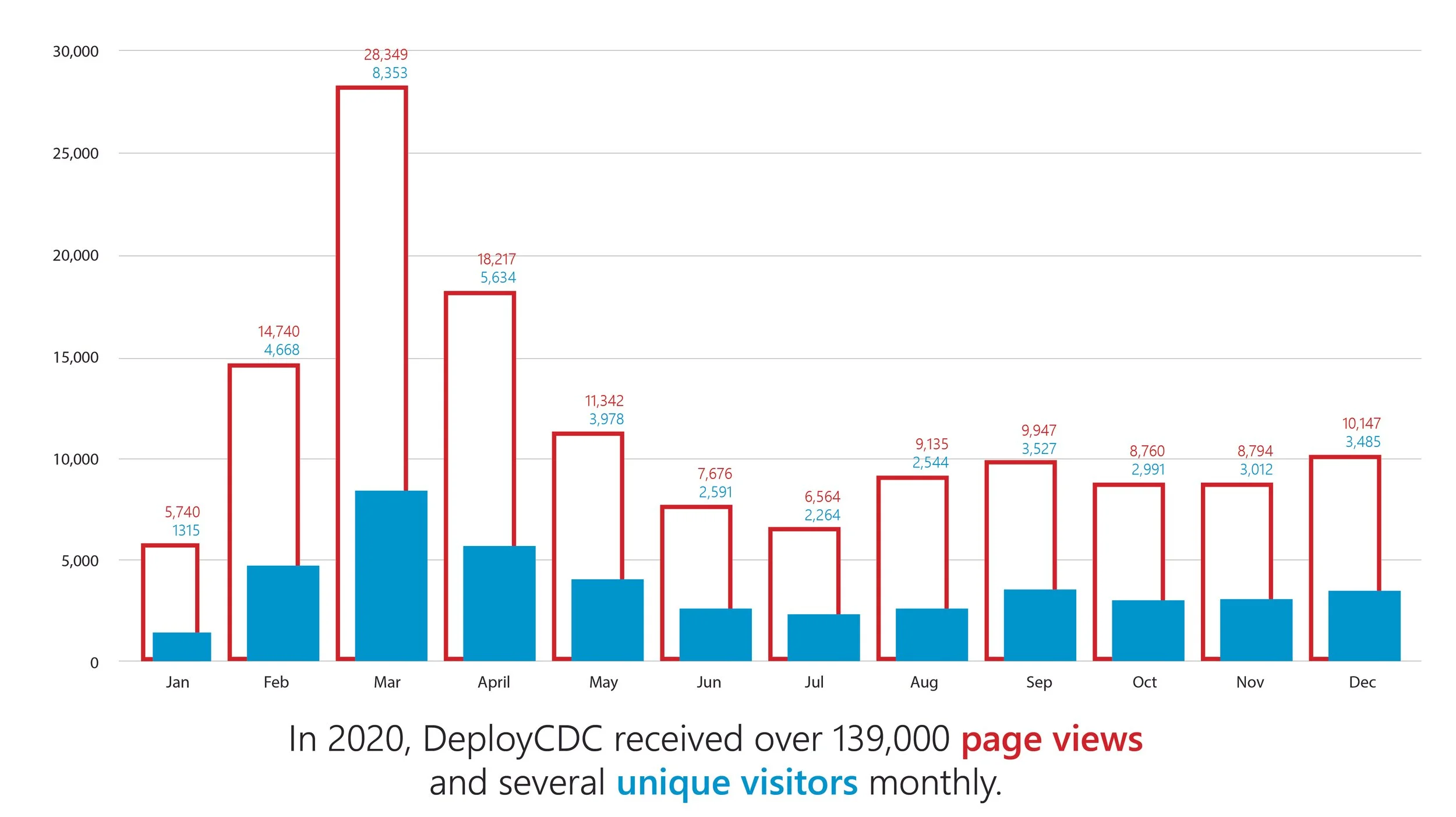
Page views vs. unique visitors 2020
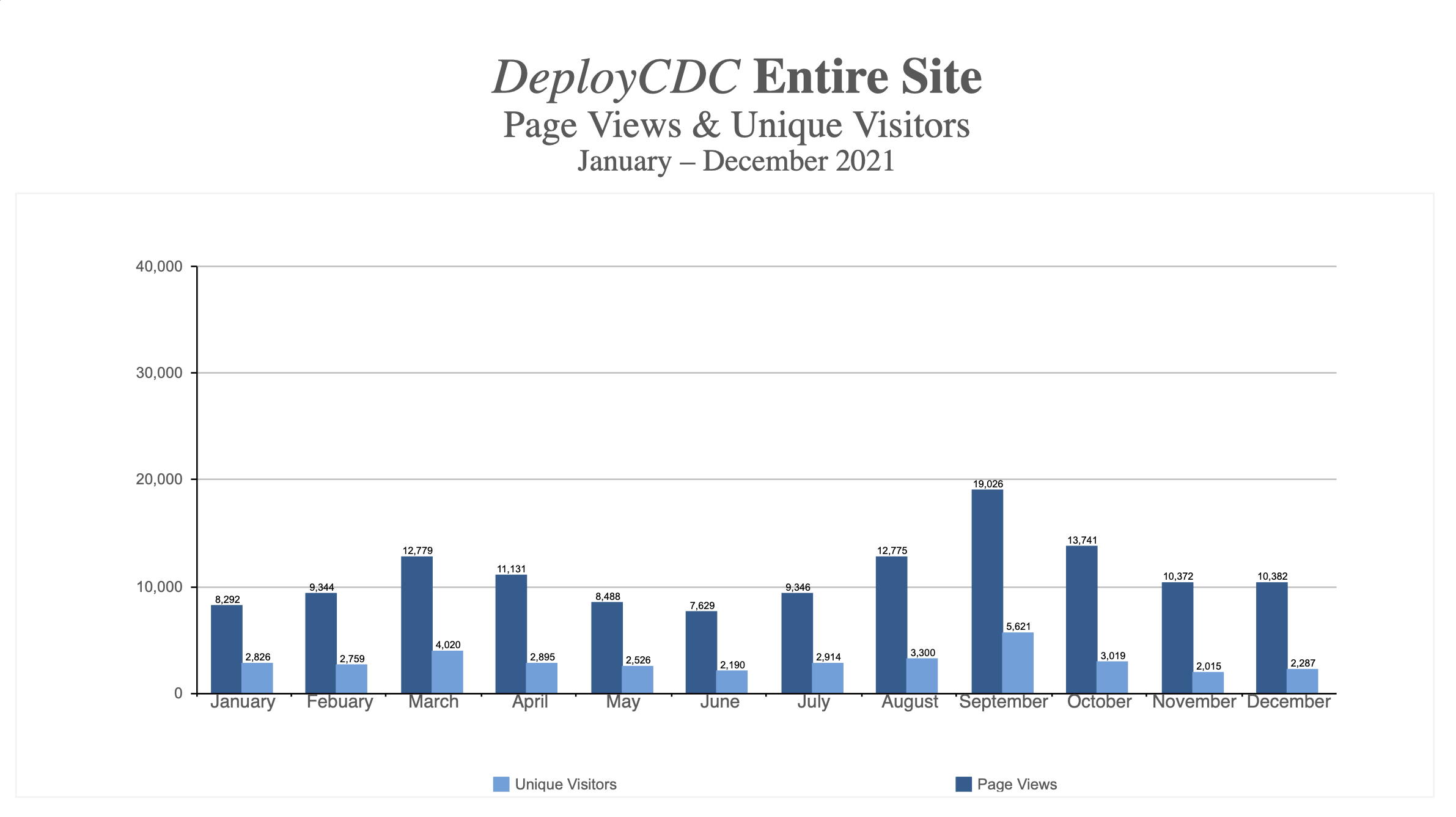
Page Views in 2021
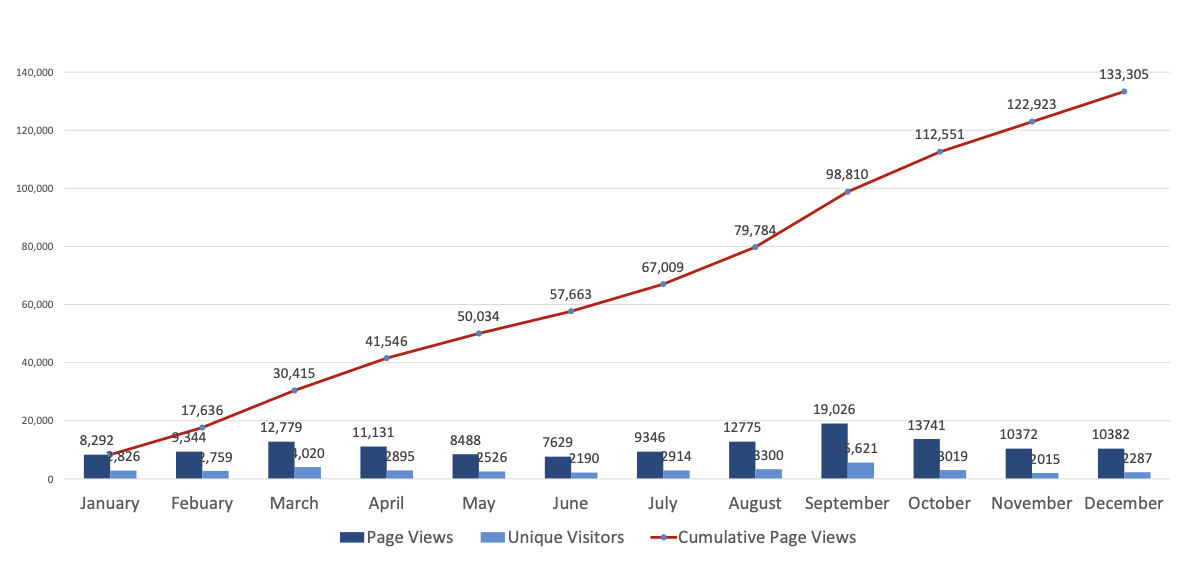
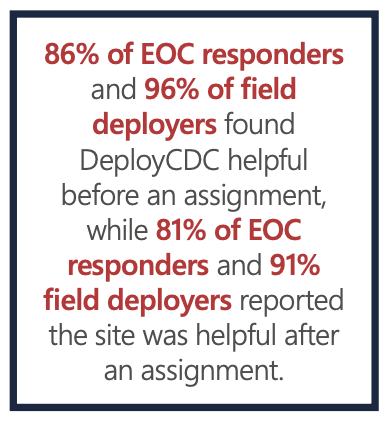
In 2021, DeployCDC received 133,305 total page views. At its peak in September 2021, the site had more than 19,000 page views and over 5,600 unique visitors.
Scale & Growth
This project demonstrates:
Systems thinking under crisis conditions
Service design across multi-sided stakeholders
Operational UX tied directly to financial impact
Designing infrastructure, not just interfaces
From 2020–2022 the platform supported:
52,000+ relief interactions
4,800+ volunteer deployments
$1.2M+ in community relief funding
Expansion from 1 region → 5 operational zones

The solution evolved from an emergency MVP into long-term digital infrastructure for DeployCDC.
What began as a national COVID-19 emergency response tool evolved into a global deployment infrastructure platform supporting epidemic response and natural disaster operations.
Initially built to coordinate pandemic-related relief efforts, the platform expanded post-COVID to support deployers responding to:
Zika outbreaks
Ebola response missions
Polio resurgence containment
Hurricanes & natural disasters
Regional public health emergencies
The system also evolved from a national deployer coordination site to an international deployment network platform.
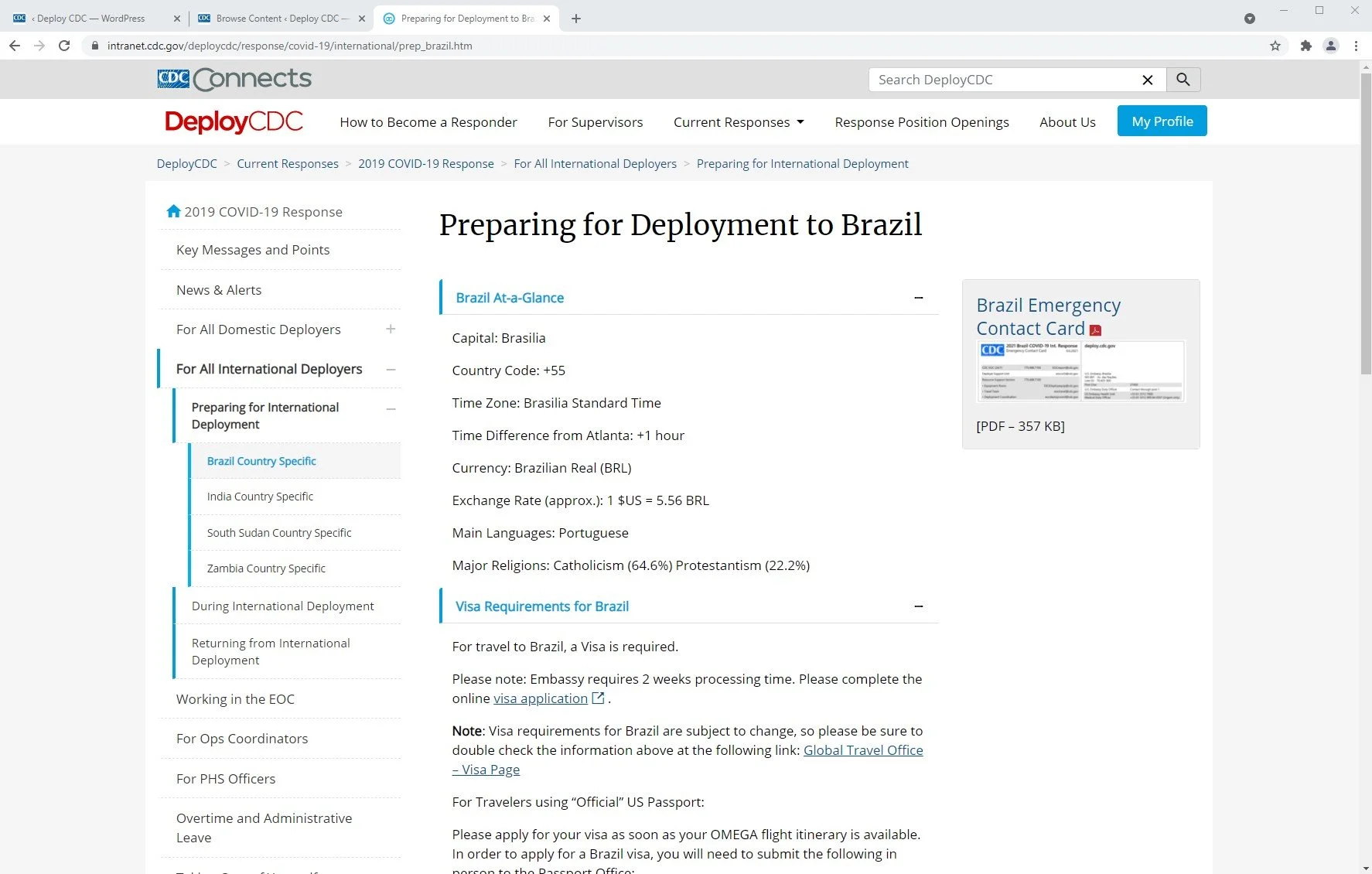
Preparing for Deployment Brazil (South America)
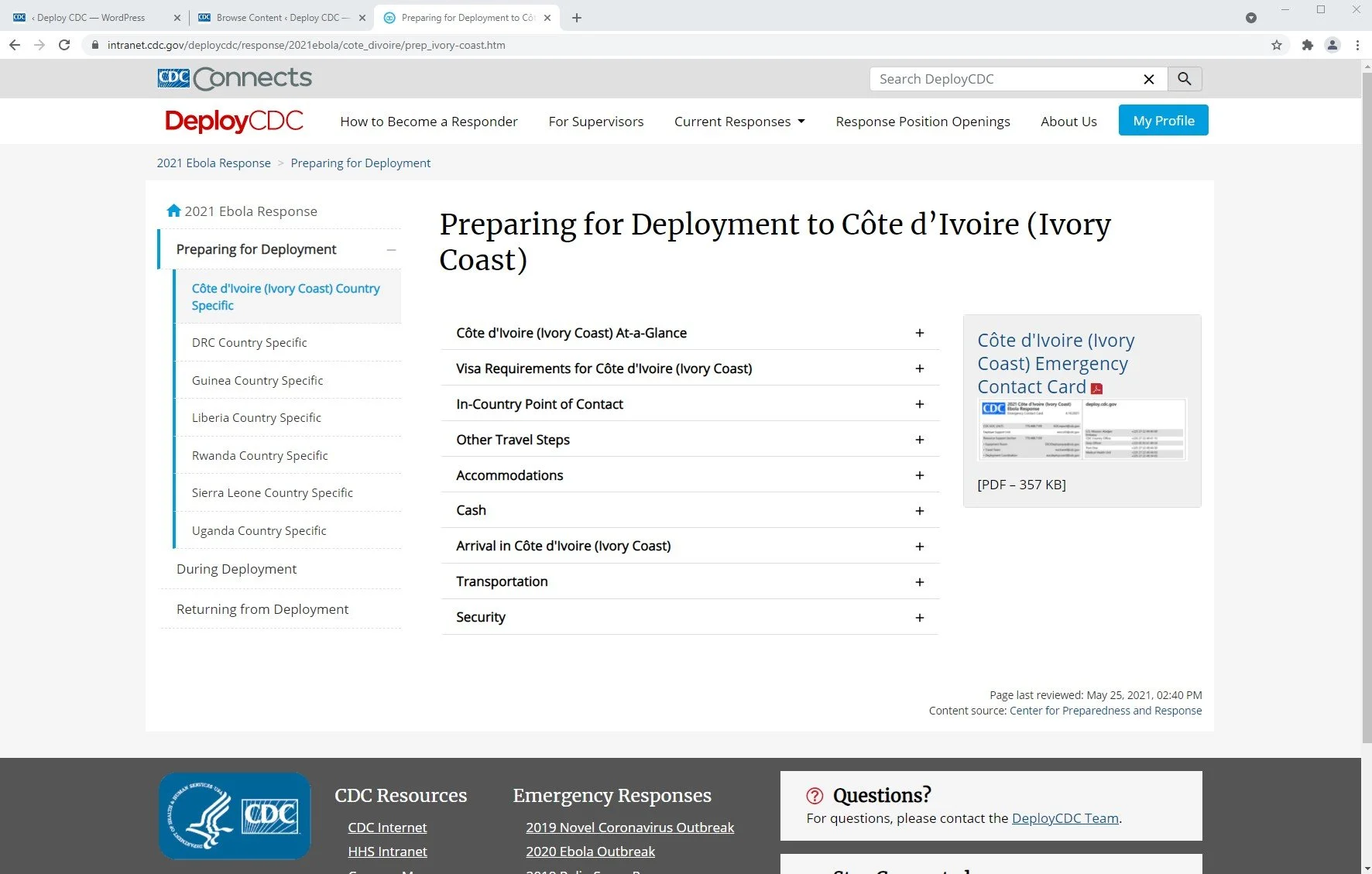
Preparing for Deployment Cote d’Ivoire (Africa)
Emergency Contact Cards
Print ready emergency contact cards created for deployers specific for each response and location. These cards were reviewed and updated almost bi-weekly to ensure deployers always had the most up-to-date contact info for their deployment. Some of these locations had spotty internet or none at all, so having these on the site ready to print out and wallet sized for easy carry.
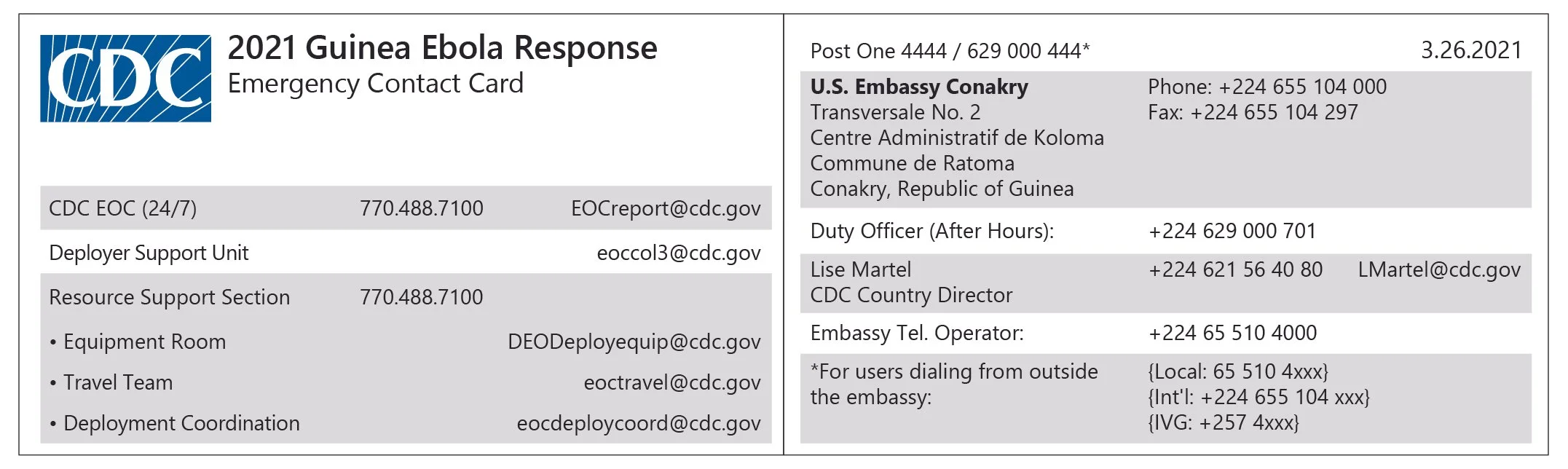
2021 Guinea Ebola Emergency Contact Card
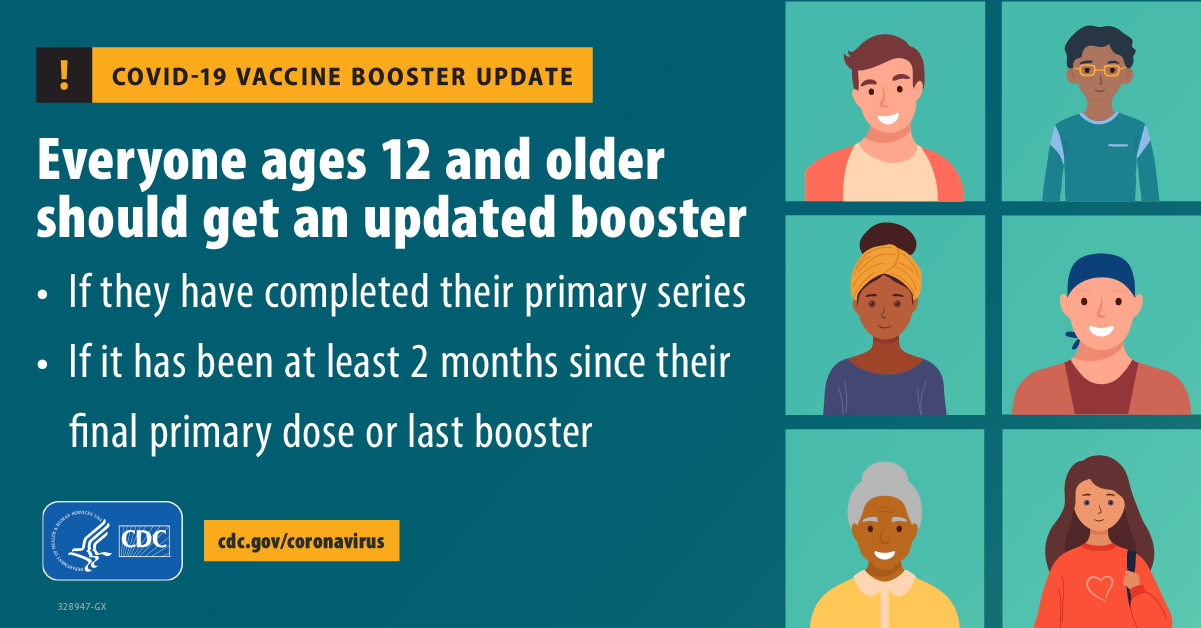
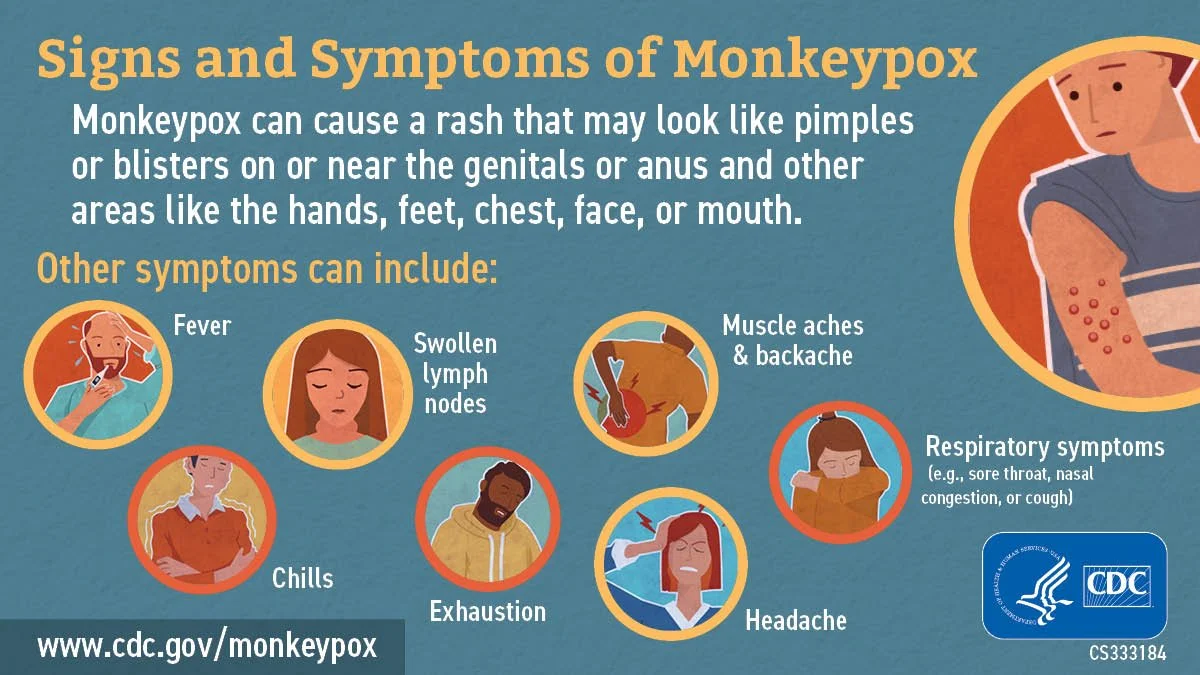
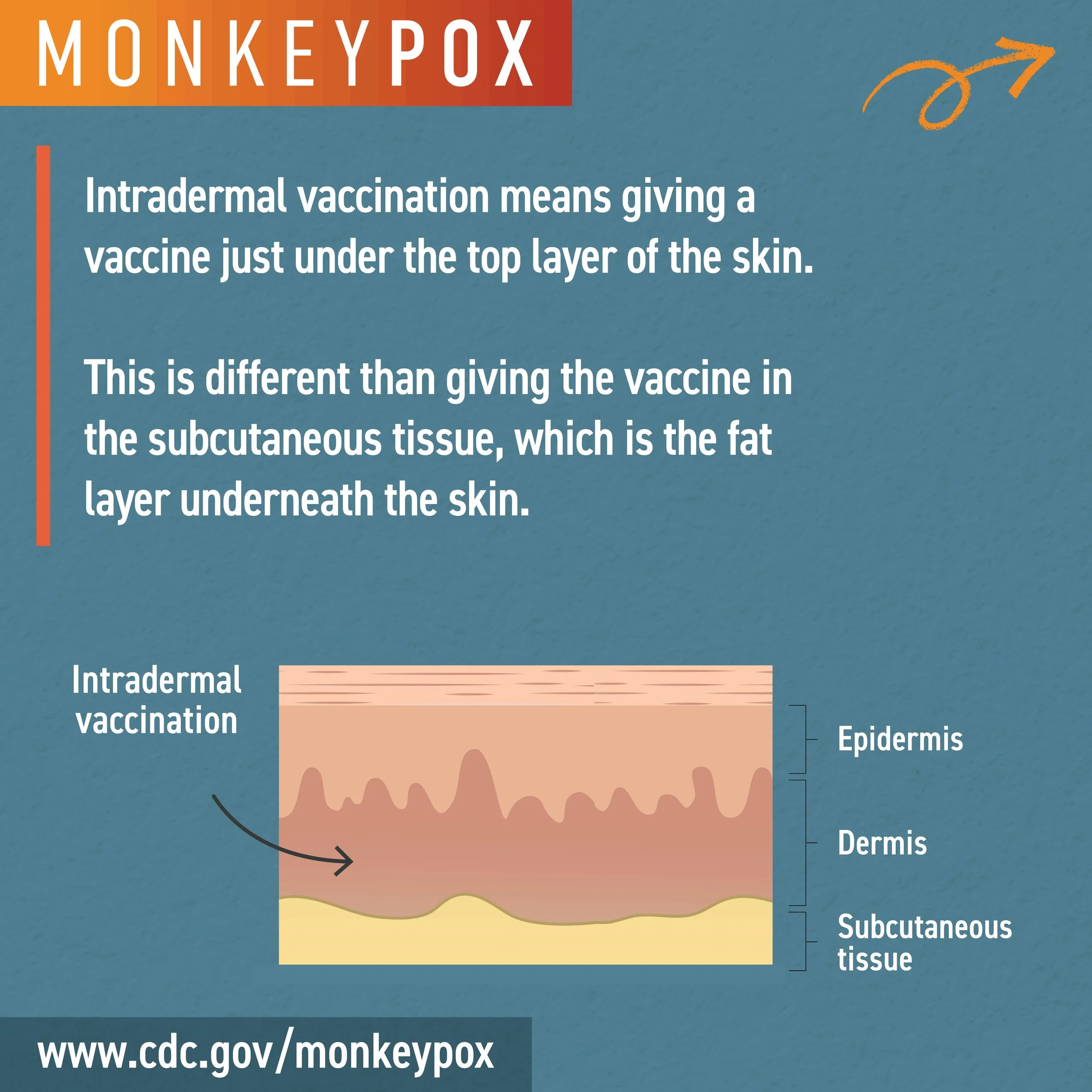
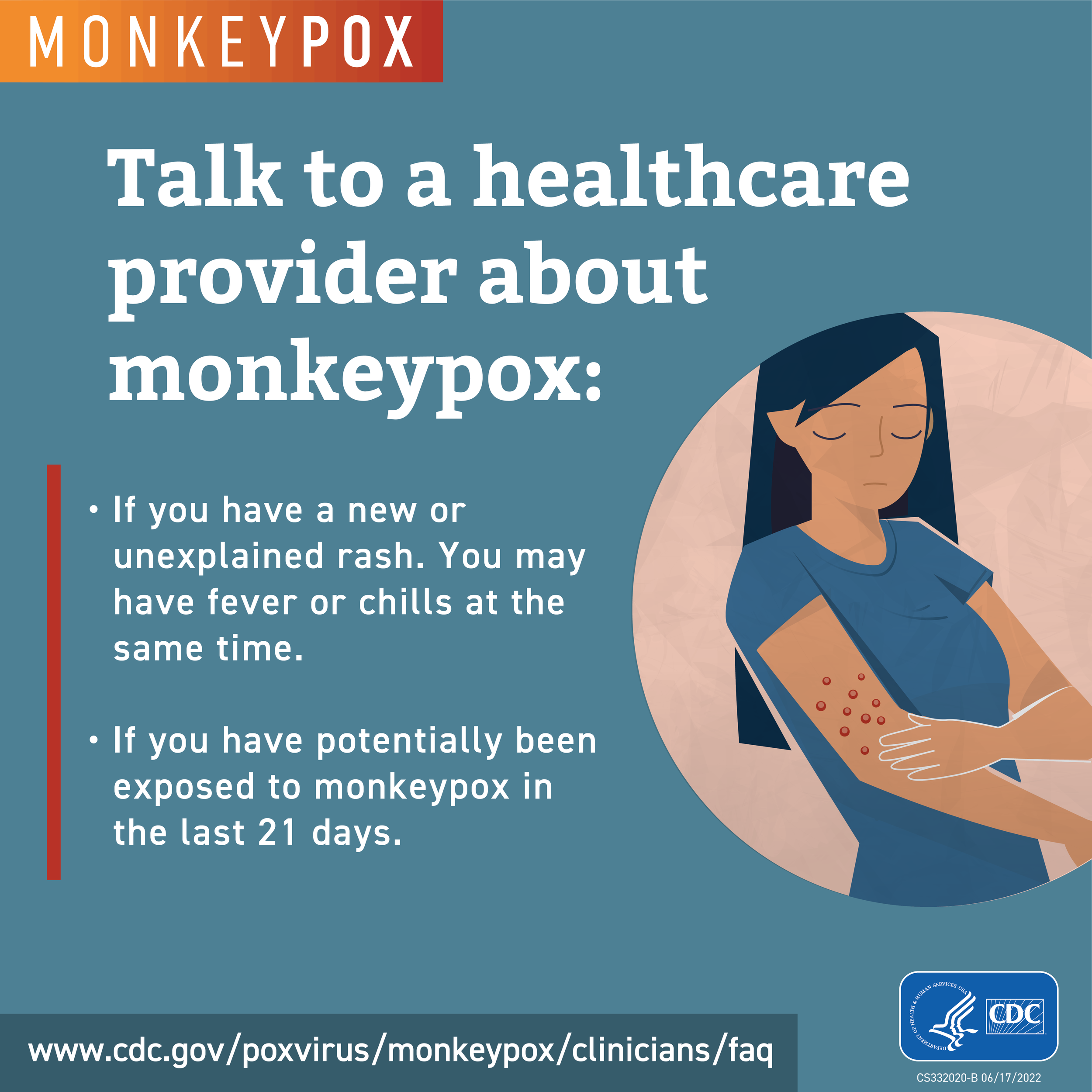
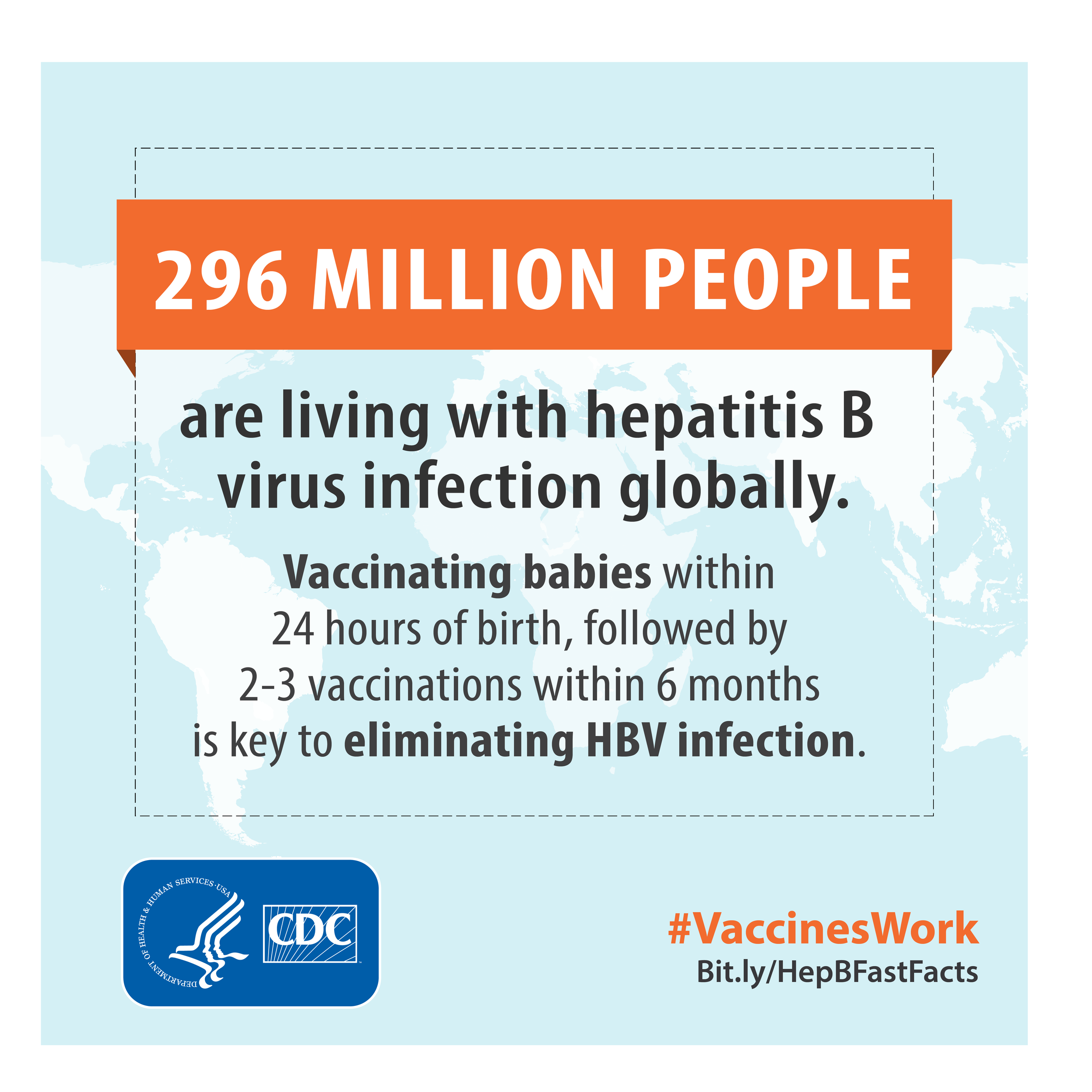
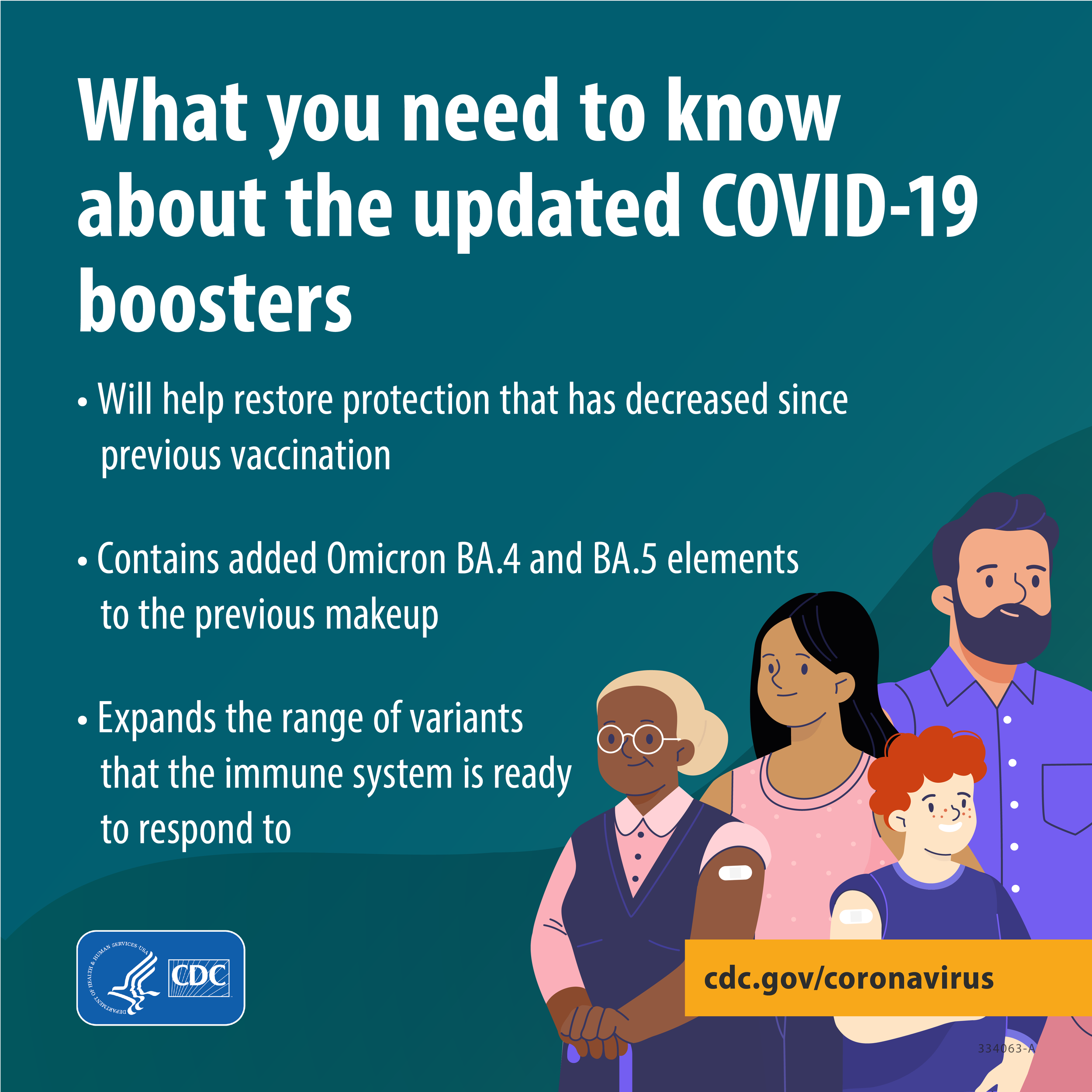
Social media graphics designed for the CDC